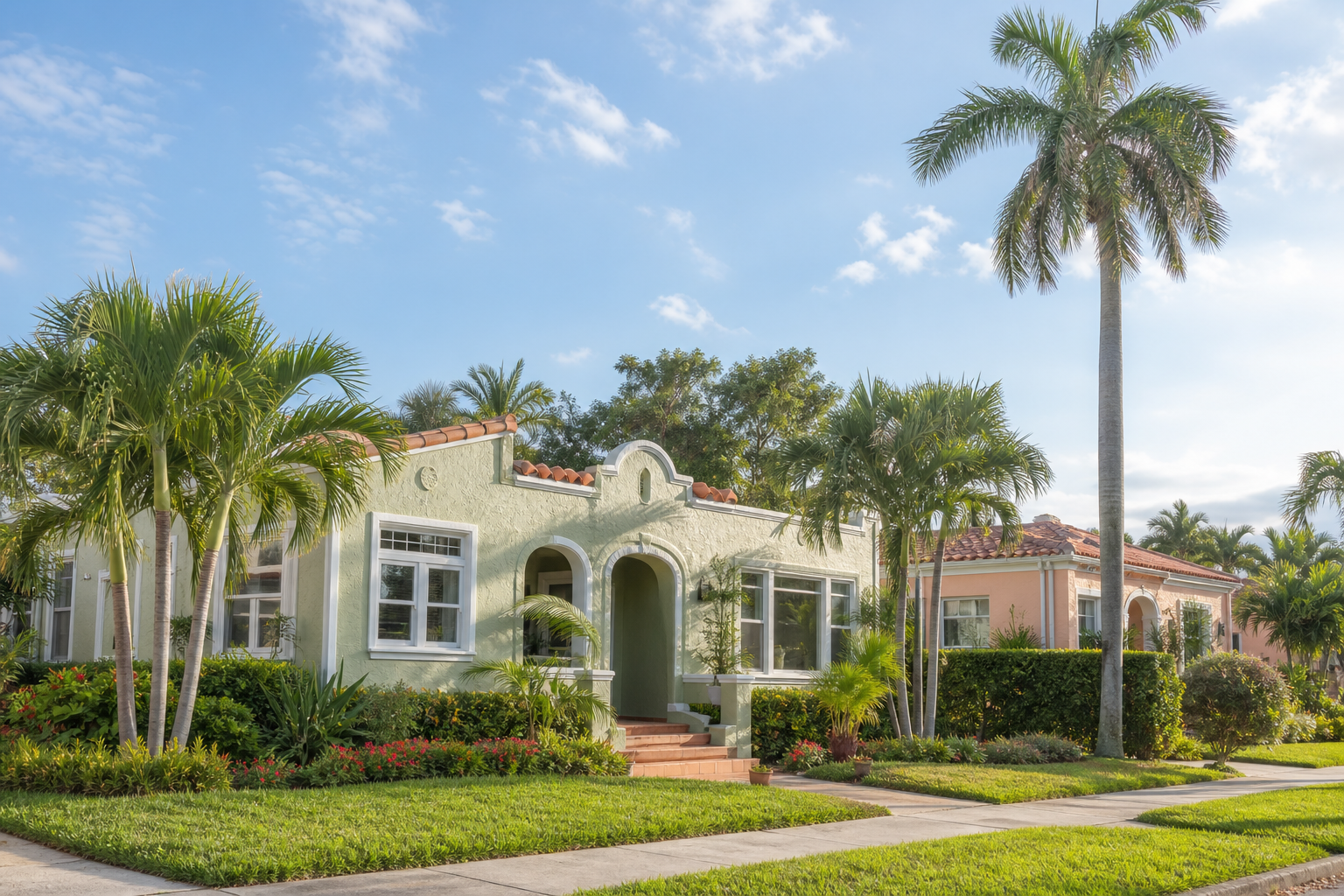
Selling a Home in Lake Worth Beach, FL: A Practical 2026 Checklist
Selling a home in Lake Worth Beach is not just a matter of choosing a price and taking photographs. A well-prepared listing answers the questions a buyer will ask about the home's condition, permits, flood history, insurance and carrying costs. That is especially important when a property has older architectural details or sits in a designated historic district. Here is the practical sequence I would use before bringing a Lake Worth Beach home to market.
1. Confirm the property's exact location and documentation
Start with the parcel record, legal description, tax history and the property's actual municipality. A Lake Worth mailing address does not necessarily mean a property is inside the City of Lake Worth Beach. City boundaries can affect permits, services and historic-review questions. Gather your survey if available, the current insurance declarations, roof age and replacement records, utility information, warranties, and permits or final inspection records for significant work. If you do not have a document, do not guess: identify what is missing and ask the appropriate city or county office how to retrieve it.
For a first look at how your property fits the area, explore my South Florida property search. A search result is a starting point, not a substitute for a current comparative market analysis.
2. Check historic-preservation rules before exterior work
Lake Worth Beach has a historic-preservation program and published design guidance. If the home is in a local historic district or otherwise subject to review, an exterior change that seems minor may require approvals. Before replacing windows, changing visible architectural elements or repainting as part of listing preparation, confirm which rules apply to this specific property with the city. The city's historic-preservation page and building-document resources are the best starting points. Keep copies of approvals and final inspections so buyers can understand what was done.
That does not mean an older house needs a full renovation to sell. Prioritize safety, water intrusion, functioning systems, clean landscaping and accurate documentation. A thoughtful scope of work is usually better than a rushed cosmetic project whose permits or workmanship become a contract issue.
3. Price against comparable homes, not a citywide median
A credible price recommendation compares recently closed sales, current competition and pending listings that resemble your home in size, condition, location and features. A renovated historic cottage, a condominium and a newer single-family house do not belong in one undifferentiated pricing bucket. Compare roof and system ages, lot and parking, outdoor space, association restrictions where applicable, and the extent of permitted updates. Then set a range that accounts for the evidence and your timing rather than anchoring to an automated estimate.
Review the net proceeds as well as the asking price. A higher offer with large repair credits or uncertain financing may produce a different outcome from a slightly lower but cleaner offer. Neither speed nor sale price is guaranteed; the right strategy depends on the specific property and the current set of buyers.
4. Get ahead of flood, insurance and condition questions
Florida law requires a residential seller's flood disclosure to be provided at or before the sales contract is executed. Review the current statutory form with your real estate and legal professionals; disclose known facts accurately rather than assuming a flood-zone map answers every question. Collect any available flood-claim, water-intrusion, drainage and remediation records. A buyer may also ask about roof age, electrical and plumbing updates, and the availability or cost of insurance. Do not promise a premium or insurability: direct buyers to their own insurer for a property-specific quote.
Ask your agent which seller-property disclosures and association documents are appropriate for the transaction. If a condominium or HOA is involved, request governing documents, current dues, special-assessment information and any required resale materials early. Clear records give buyers a better basis to evaluate the home and can reduce surprises during inspection.
5. Build a realistic closing-cost and tax plan
Ask a title professional for a preliminary seller net sheet. Typical line items to examine include mortgage payoff, brokerage compensation as negotiated, title and settlement charges, prorated taxes, association fees, repair credits and Florida documentary stamp tax on the deed. Florida's Department of Revenue states the deed tax in Palm Beach County is $0.70 per $100 or portion of the consideration; confirm the actual calculation and who pays each charge under your contract with the closing professional.
If the home has a homestead exemption or you plan to buy another Florida primary residence, consult the Palm Beach County Property Appraiser on assessment and portability questions. Your current tax bill is not a reliable estimate of a buyer's future bill, and the answer depends on the buyer's own eligibility and reassessment. Do not market an assumed tax amount as a guaranteed future expense.
6. Market the property accurately, then evaluate the whole offer
Before photographs, remove clutter, address visible maintenance items and decide which features can be described with supporting evidence. Show room dimensions and updates accurately. For an older home, original character can be an asset, but avoid representing unpermitted work as permitted or calling a room a legal bedroom without verification. Review your photos, listing description and showing plan together so the presentation matches the actual property.
When offers arrive, compare financing, deposit, inspection and appraisal terms, requested credits, contingencies and closing dates alongside price. Ask your agent to explain the risk of each structure. My buyer and seller guides can help frame the broader process, while a property-specific discussion will clarify the decisions that matter for your home.
Frequently asked questions
Should I renovate before selling in Lake Worth Beach?
Not automatically. Start with condition and permit records, then estimate the likely cost, timing and market response to each proposed improvement. For homes potentially subject to historic review, check with the city before committing to exterior changes.
Does a property outside a mapped high-risk flood zone need disclosure?
The statutory flood-disclosure obligation is a transaction requirement, not simply a question of which zone appears on a map. Complete the applicable form truthfully and seek legal guidance if a specific answer is unclear.
How do I choose a list price?
Use current, property-specific comparable sales and active competition, then test how condition, permitted updates and timing affect your net. A citywide median alone is too blunt for a pricing decision.
If you are considering a sale in Lake Worth Beach, contact me at Integritos Real Estate. I can help you organize the property facts, review relevant comparables and map a listing plan that fits your goals without promising a particular outcome.